Women's health
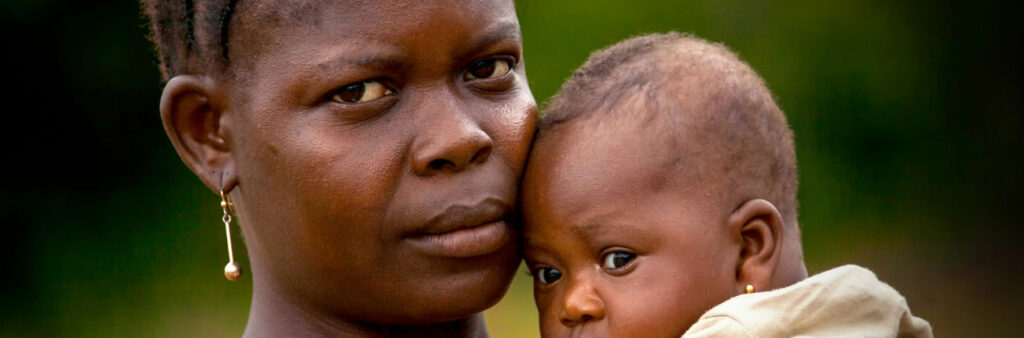
In Cameroon, 24% of teenage girls aged 15 to 19 are already mothers or pregnant with their first child; Teenage pregnancies vary from just 6% in urban areas to 44% in rural areas (DHS 2018). Use of modern FP methods by married women varies from just 6% in rural areas to 28% in urban areas. ACMS implements projects that help improve the lives of women, adolescents and youth by reducing unmet need for family planning and promoting the reduction of preventable maternal deaths.
.
Our approach to reproductive and maternal health
We believe that effective healthcare starts by putting people at the center – providing them with the information, options, tools and support they need to take charge of their well-being. By expanding access to innovative self-care solutions, strengthening healthcare systems and markets, equipping providers and leveraging technology to break down barriers, we’re helping communities and individuals take control of their own health and futures.
Developing quality, person-centred care
We take a holistic approach to quality of care; Our teams are rooted locally, enabling us to understand in depth how individual and societal behaviors influence healthcare decisions and the experience of care, and to apply this knowledge to inform policy, generate demand and close capacity gaps at every level of the healthcare system.
Accelerate access to self-care solutions
Self-care interventions reduce pressure on healthcare systems. Our strategic partnerships with government and stakeholders are helping to operationalize self-care frameworks that complement health systems, expand self-care methods such as self-injection of contraceptives to improve people’s autonomy over their health, and support self-care as a means of achieving universal health coverage.
Strengthen and support healthcare staff
ACMS strengthens the healthcare workforce by developing protocols, designing and delivering training, adopting quality-of-care supervision and support approaches, and digital tools that enhance providers’ skills and enable them to deliver client-centered care in a variety of healthcare settings. We strengthen providers’ ability to deliver healthcare to women and adolescent girls, addressing menstruation, cervical cancer, reproductive and postpartum health, and links to child healthcare.
Harnessing technology and innovation
We live in an era of innovation, with new contraceptive technologies, women’s health diagnostics, telehealth and e-commerce platforms. Catalyzing change is a challenge, but when we embrace digital technology and health innovation to strengthen all levels of the healthcare system, we can connect people with the quality care they want and need.
Strengthening the voice and choice of individuals and communities
We partner with individuals, communities, civil society and public and private sector players to pave the way for sustainable, locally-owned healthcare solutions. Customer and provider insights make our services more respectful, responsive and stigma-free, and our technical experts use human-centered design principles to develop new approaches to healthcare with consumers around the world. For example, our flagship youth program is designed, implemented and expanded by teenage girls, for teenage girls, to plan for their futures and achieve their goals.
Featured projects
ProFam
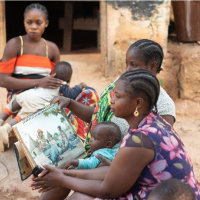
Through its “ProFam” social franchise introduced in 2004, ACMS has improved access to short-term family planning methods. Thanks to funding from the Women Health Project, services have been expanded to include long-acting contraceptives, such as the Tcu 380 IUD and Jadelle implants, post-abortion care and prevention of unsafe abortions
PASSR
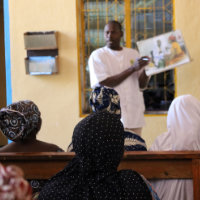
ACMS also deploys the Programme d’Accès aux Services de Santé de Reproduction (PASSR), which provides modern contraceptives and post-abortion care, including treatments such as ACE-Miso for women suffering from complications related to incomplete abortion. The project is being implemented in four regions: North, Far North, Adamaoua and East. The project is being implemented in 55 health districts and 376 public and private health facilities. Its aim is to increase the use of higher-quality reproductive health services. The products distributed to health facilities through this project are: (intrauterine devices, contraceptive implants, contraceptive injectables, contraceptive pills and emergency contraceptives)
.
PASSR CoRD
Since January 1, 2025, ACMS has been implementing the Programme d’Accès aux Services de la Santé de la Reproduction Complémentaire de la Remise de Dette du Cameroun envers l’Allemagne, entitled PASSR CoRD. PASSR CoRD aims to reduce the gaps identified after the first and second phases of the PAS SR project. The project covers 57 health districts and 100 public and private health facilities.
Support to female refugees and malnourished children from Central African, Republic, Nigeria and Cameroon
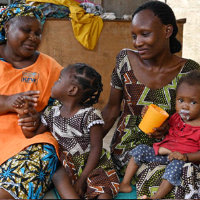
The Support to female refugees and malnourished children from Central African, Republic, Nigeria and Cameroon project focuses on family planning and sexual and reproductive health for vulnerable and displaced populations. The project is deployed in 30 health districts and 32 public and private health facilities.
Stay informed with our newsletter
Sign up to receive the latest ACMS news and updates straight to your inbox.