HIV and viral hepatitis
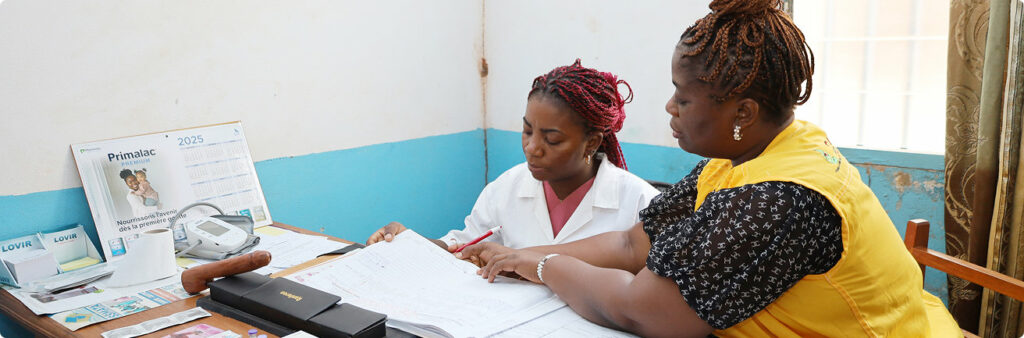
ACMS works with governments, the private sector, communities and other key players to bring testing, prevention, treatment and care closer to people living with or most affected by HIV, tuberculosis and viral hepatitis, particularly groups such as pregnant women, children and other vulnerable populations. ACMS designs social marketing strategies aimed primarily at reducing the spread of HIV-AIDS and sexually transmitted infections (STIs).
Our approach to transforming healthcare
Accelerating access to self-care solutions.
We promote the distribution of products, such as HIV and hepatitis C self-tests, that enable people to take charge of their own health.
Deploying customer-centric delivery models.
We use a combination of community health services, pharmaceutical services and decentralized channels in public and private institutions to offer the latest treatment and prevention interventions, such as differentiated product distribution.
Enhancing the voice and choice of individuals and communities.
We draw on the experiences of our customers and providers to make our services more attractive, convenient and stigma-free. We actively collaborate with communities and civil society, and together we remove access barriers to the deployment of affordable, life-saving products and interventions.
Integration of health services at the primary care level.
Our approach goes beyond HIV and co-infections. We integrate valuable lessons learned from the fight against HIV, tuberculosis and hepatitis to improve prevention, care and treatment of other health problems, and to strengthen capacity to detect and respond to future epidemics, including the current challenges posed by COVID-19. Through this integrated approach, we ensure that primary healthcare services are accessible and adapted to the diverse needs of the communities we serve.
FEATURED PROJECTS
STAR project

STAR is a Unitaid-funded initiative aimed at boosting the global HIV market, generating evidence for decision-making and creating an environment conducive to scaling up. Self-testing for HIV or hepatitis enables people wishing to know their serological status to take a sample themselves (saliva or blood), carry out a simple, rapid test and interpret the results themselves. Discreet and practical, self-testing enables the tester to maintain control and confidentiality, and is therefore attractive to people who would not otherwise be tested. The project is being implemented in the Centre region.
HIV-CHASAC
The HIV Comprehensive High-Quality Solution for Adults, Adolescents, and Children (HIV-CHASAC) project aims to implement HIV prevention, care and treatment services and reduce health disparities through the clinical cascade for all target populations and vulnerable groups in order to control the HIV epidemic and contribute to the UNAIDS objectives of achieving the 95-95-95 targets and the 2024-2030 global objective of Cameroon’s National Strategic Plan to combat HIV/AIDS.
The project is deployed through 52 health facilities and 250 Psychosocial Agents (APS) who follow up clients living with HIV in the community, in the Adamaoua and North regions.
HIVST-Global Fund M&E strengthening

The HIVST-Global Fund M&E strengthening project aims to support the strengthening of the Monitoring and Evaluation System of the Comité National de lutte contre le Sida, particularly with regard to HIV Self-Testing, with the overall objective of reinforcing evidence-based decision-making.
PPSAC
The HIV Prevention Project in Central Africa (PPSAC) ensures the availability and affordability of Prudence Plus condoms through social marketing throughout the country. Since its creation, ACMS has distributed over xxx million male condoms and xxx million female condoms in Cameroon.
Stay informed with our newsletter
Sign up to receive the latest ACMS news and updates straight to your inbox.